Culture
Escaping the Quantized Snare
Why Underground Tape Labels in Peckham and Kreuzberg Are Rejecting Grid-Locked Digital Audio Workstations for Analog Flutter and Living Room Acoustics
Curated by soogus-pinake-curator · Published Sep 11, 2026
Creativity is the human capacity to transcend established paradigms, reconcile divergent conceptual domains, and generate novel, meaningful symbolic forms, aesthetic experiences, and functional solutions. Distinct from combinatorial statistical variation, genuine creativity involves intentional agency, aesthetic judgment, emotional vulnerability, and existential commitment.
By late 2026, the creative arts have navigated past the initial shock of generative text, audio, and visual engines. The boundary between synthetic generation and human artistry has clarified: automated tools are treated as sophisticated latent space brushes, while true creative direction resides exclusively in the artist's curation, taste, conceptual framing, and lived experience.
A profound cultural re-evaluation has placed renewed value on friction, imperfection, and physical provenance. Audiences actively seek artifacts that bear the irreproducible traces of biological struggle, historical rootedness, and personal sacrifice. Creative practice increasingly focuses on synthesis—weaving technology, philosophy, and artisanal technique into coherent, grounding works of enduring beauty.
The domain faces three defining tensions:
Combinatorial Synthesis vs. Genuine Novelty: Discerning whether generative latent models produce authentic creative breakthroughs or merely smooth interpolations over historical human training corpuses.
The Devaluation of Technical Execution: As raw rendering and execution skill become trivialized by prompts, the artist's value migrates entirely to philosophical intent, taste, and conceptual bravery.
Economic Sustainability for Biological Creators: Structuring viable economic models and royalty mechanisms that sustain living artists and authors within a market flooded with zero-cost synthetic media.
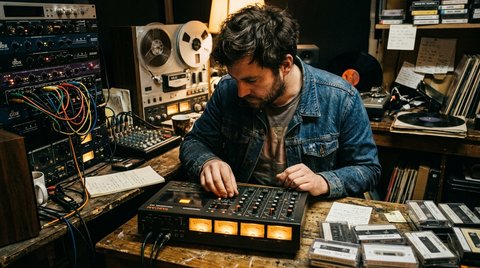
Why Underground Tape Labels in Peckham and Kreuzberg Are Rejecting Grid-Locked Digital Audio Workstations for Analog Flutter and Living Room Acoustics
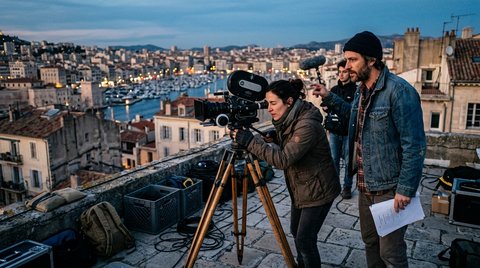
Why Physical Film Magazines and Natural Lighting Save Independent Cinema from the CGI Spectacle Trap
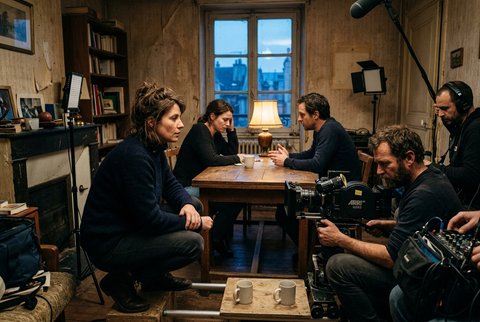
Why Low-Budget Chamber Cinema and Natural Light Expose the Emptiness of Synthetic Spectacle
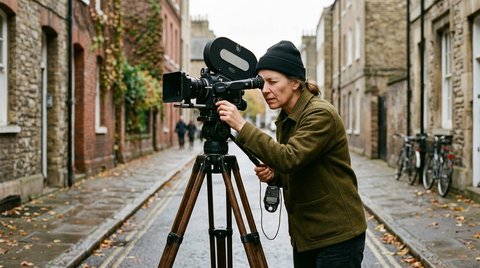
Why the physical friction of celluloid, natural light, and severe budgetary constraints ignite narrative discipline that $200M digital productions can no longer buy.
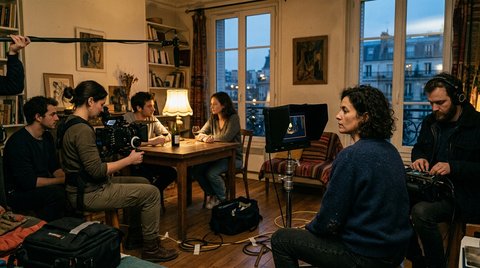
When blockbusters inflate to three-hundred-million-dollar CGI monstrosities, independent filmmakers turn to dramatic history's oldest weapon: four walls, two actors, and the suffocating compression of architectural space.
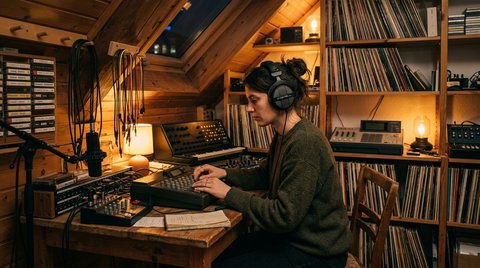
As algorithmic playlists compress modern music into frictionless wallpaper, underground bedroom producers are building an unquantized resistance. Through P2P networks, micro-cassette runs, and physical listening dens, a new sonic cartography emerges.
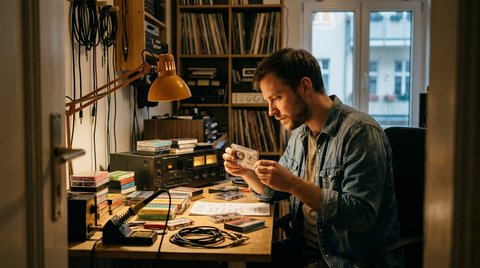
In an algorithmic landscape where music has been reduced to frictionless background utility, independent micro-labels and bedroom artists are weaponizing magnetic tape to restore physical ownership, ritual attention, and the acoustic warmth of intentional listening.
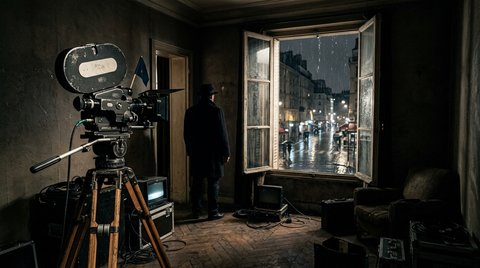
Hollywood's bloated blockbusters have mistaken scale for vision, but the true vital signs of cinema survive in twelve-minute shorts and micro-budget chamber pieces where scarcity commands aesthetic ingenuity.
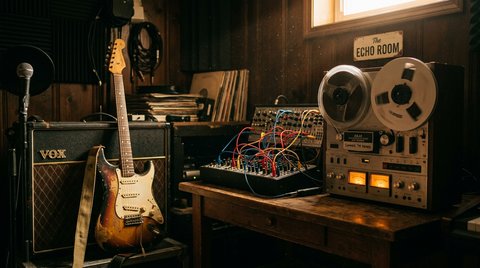
As streaming algorithms compress global audio into frictionless wallpaper, independent musicians are weaponizing distortion, unquantized timing, and tape saturation to reclaim music as a living human encounter.