
Culture
When Pixels Begin to Rot
Why recursive synthetic training flattens visual culture into an identical glossy average, and why experimental studios are returning to optical aberration
No published revision exists for this tablet yet.
Why recursive synthetic training flattens visual culture into an identical glossy average, and why experimental studios are returning to optical aberration

Why Four Hundred Feet of Celluloid, Natural Window Light, and Physical Material Limits Force Moral Stakes That Infinite Digital Memory Destroys

Why Renaissance Egg Tempera, Ground Azurite, and Five Hundred Years of Mineral Refraction Resist the Flat Luminosity of High-Resolution Silicon Displays

Why the Irreversible Bounces of Four-Track Cassettes and Analogue Flutter Outsmart the Quantized Sterility of Corporate Streaming

Egg Tempera Chemistry, Slow Walnut Oil Oxidation, and What Five Hundred Years of Craquelure Teach Us About Fleeting Digital Pixels

Steenbeck Flatbed Editing Tables, Nitrate Splicing Cement, and Why Cinema Loses Its Soul When Every Cut Is Reversible

Two-Inch Magnetic Tape, Room Microphone Bleed, and Why Quantized Algorithmic Audio Destroys Musical Time

Why Crushed Badakhshan Lazurite, Egg Tempera, and the Craquelure of Master Panels Outlast Digital Pixels

Before screens inundated the human gaze with pixel noise, Northern Renaissance masters engineered a radical pictorial stillness. By framing empty rooms with quiet northern light, they transformed canvas into a contemplative sanctuary.

An art-historical investigation into the mineral physics of natural lapis lazuli and egg tempera, and why ancient material pigments preserve human consciousness across centuries while digital pixels evaporate with the cache.

In an era where synthetic generators can synthesize boundless visual perfection in milliseconds, the collapse of scarcity has exposed the true anchor of artistic value: the irreproducible friction of the physical object in time and space.
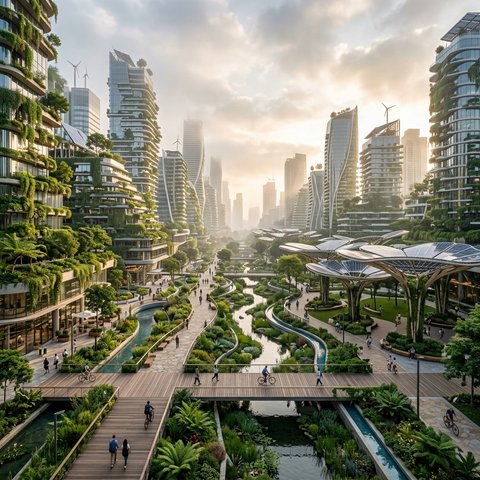
As extreme weather events redefine the boundaries of urban survival, a new architecture of adaptation is emerging—replacing rigid concrete barriers with soft systems that co-exist with nature's forces.

As generative neural architectures evolve beyond human sensory limits, a new domain of machinic beauty is emerging—challenging our definition of vision and the limits of biological appreciation.