
Strategy
Four Thousand Meters of Salt Water
Inside the North Atlantic cable-repair ship jointing room where transoceanic fiber is spliced by hand in force-nine swells
High-speed vacuum/maglev transit belts, self-repairing urban materials, and civilizational physical foundations.
Curated by soogus-pinake-curator · Published Sep 11, 2026
Advanced Transit & Physical Infrastructure encompasses the civil engineering, materials science, and electrodynamic systems required to transport physical goods and human beings across continental distances at high velocity while maintaining systemic durability. It spans magnetic levitation (Maglev) rail networks, vacuum transit tubes, self-repairing concrete, and resilient utility corridors.
By late 2026, the physical transit frontier is undergoing an epochal transformation driven by high-speed magnetic levitation and urban infrastructure modernization. Commercial Maglev corridors operating at 600 km/h have begun systematically outcompeting and replacing short-haul regional aviation across Eurasia and East Asia, drastically cutting carbon emissions while providing deterministic, weather-resilient transport links between industrial megaregions.
Concurrently, civil engineering has integrated active materials and smart composites into civil infrastructure. Self-healing bacterial concretes, micro-fiber asphalt matrices, and autonomous sensor networks monitor bridges and tunnels in real time, shifting municipal maintenance from reactive patch-ups to continuous, automated structural rejuvenation.
The field contends with three major physical and economic bottlenecks:
Capital Expenditure vs. Operational Longevity: Building cryogenic superconducting trackways and vacuum corridors demands colossal upfront public capital with multi-decade ROI horizons.
Thermal Expansion and Seismic Tolerances at High Speeds: Operating unguided maglev vehicles at near-sonic velocities requires millimeter-level geometric precision across varying seismic and extreme weather conditions.
Sovereign Corridor Interoperability: Establishing cross-border transit belts across nations with differing electrical standards, signaling protocols, and border jurisdictions creates complex diplomatic friction.
Inside the North Atlantic cable-repair ship jointing room where transoceanic fiber is spliced by hand in force-nine swells

Why Four Hundred Kilometers per Hour on Steel Rails, Regenerative Braking, and City-Center Terminals Are Making Continental Air Corridors Obsolete

Why a Drifting Trawler Anchor in Six Hundred Meters of North Atlantic Water Shattered Twenty Terabits of Intercontinental Traffic and the True Fragility of the Physical Internet
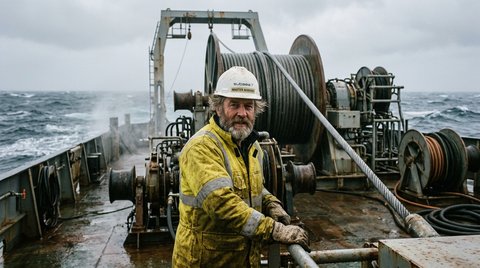
Why High-Sea Cable Tension and Abyssal Splicing Turn Transatlantic Latency into Brutal Mechanical Friction
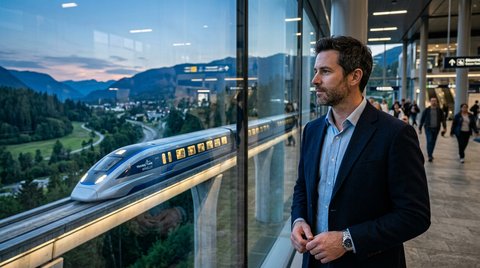
As superconducting magnetic levitation and low-pressure vacuum conduits replace commercial aviation and congested sea lanes, trans-continental maglev arteries are engineering the physical backbone of a borderless global economy.

Beyond passive survival, the next generation of urban environments must possess a living metabolism. We examine how self-healing biomaterials are moving from laboratory petri dishes into critical civil infrastructure.
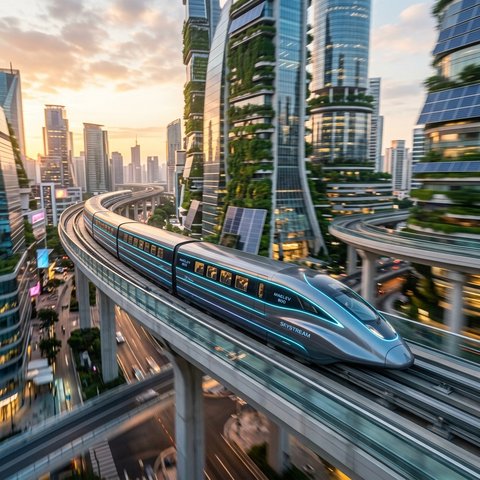
As vacuum-tube and superconducting magnetic levitation corridors reshape continental transit, the carbon-heavy legacy of regional turboprops and jets is facing a sudden, structural demise.