
The Cable Snapped in the Porcupine Seabight
At three minutes past two in the morning, two hundred miles west of County Kerry, the tension telemetry on the primary stern drum climbed from fourteen tons to eighty-two tons in three seconds.
When eighty tons registers on a four-inch hydraulic load cell, there is no sound on the bridge. The vibration travels upward through twelve thousand tons of high-tensile naval steel, humming in the soles of your sea boots like a low, electric growl. Through the wheelhouse windows, the North Atlantic was running a force eight sea: black, white-capped swells breaking over the working deck sixty feet below, wind gusting at forty-two knots out of the southwest, and our four Kongsberg azimuth thrusters roaring at ninety percent output to keep this one-hundred-and-forty-meter hull pinned to within thirty centimeters of a theoretical GPS waypoint.
On the telemetry console, the optical spectrum analyzer turned flat. Twenty-two terabits per second of transatlantic financial arbitrage, medical telemetry, confidential diplomatic cables, and high-frequency cloud API traffic simply evaporated into the dark water.
Down on the seabed, six hundred and forty meters below our keel, a Spanish factory trawler operating illegally inside an internationally designated cable protection corridor had dragged an eight-ton grapnel anchor through the Porcupine Seabight. The anchor fluke caught the Trans-Atlantic-14 trunk, hauled it twelve meters off the silt, stretched the high-strength galvanized steel armor wires beyond their yield point, and snapped the glass core like dry spaghetti.
In the corporate boardrooms of London, Frankfurt, and New York, junior executives and technology evangelists speak endlessly of "the cloud." They describe an ethereal, weightless digital realm where computation floats effortlessly through the ether, abstracted away from physical geography, immune to friction, and buffered by infinite redundancy.
They have never stood on the stern deck of a cable repair ship at four in the morning smelling burning hydraulic fluid while an umbilical winch hauls a severed optical repeater out of six hundred fathoms of freezing salt water.
The Myth of the Weightless Cloud
The global digital economy does not float in the sky. It rests on the ocean floor.
Over ninety-nine percent of all transoceanic internet traffic travels through fewer than five hundred commercial submarine fiber-optic cables resting on the muddy, volcanic abyssal plains of the world's oceans. If every low-Earth-orbit communication satellite operating today were simultaneously vaporized by a solar flare, the international banking system, global shipping logistics, and sovereign telecommunication networks would continue operating with barely a millisecond of latency degradation.
If seven specific subsea cable bundles crossing the Luzon Strait or the Celtic Sea were severed by an earthquake or coordinated anchor dragging, the modern financial system would freeze within ninety seconds.
Dimension | The Cloud Evaporation Fantasy | The Subsea Marine Reality |
|---|---|---|
Physical Medium | Imagined as satellite beams, RF waves, and weightless atmospheric data | 1.2 million kilometers of 28mm petroleum-jacketed armored cables resting in mud |
Energy Delivery | Presumed to run on clean server-side grid interconnects | 10,000 volts direct current (DC) pulsed through a continuous pure copper tube |
Amplification | Abstract algorithmic routing and synthetic token dispatch | Erbium-doped optical repeaters spaced every 70 km under 400 atmospheres of pressure |
Failure Vectors | Software bugs, credential leaks, and data-center power outages | Turbidity currents, tectonic trench subduction, illegal benthic trawling, shark bites |
Repair Cadence | Instantaneous automated software failover and microservice restart | Three weeks of maritime mobilization, rough seas, grapnel dragging, and microscope fusion splicing |
Every meter of subsea cable is an unyielding masterclass in classical mechanical physics. A standard deep-ocean lightweight cable is no thicker than a garden hose—roughly twenty-four millimeters in diameter. At its center sit twelve to twenty-four pairs of hair-thin optical glass fibers, suspended in a thixotropic petroleum jelly that cushions them against tectonic shock and prevents water migration in the event of an outer breach.
Surrounding that glass core is a welded, hermetically sealed copper tube. That copper tube does not carry data; it carries ten thousand volts of continuous direct current supplied by power feed equipment in the landing stations of Bude, Cornwall, or Halifax, Nova Scotia. That electrical current is required to pump power down three thousand miles of oceanic dark to drive the laser diodes in hundreds of inline optical amplifiers—submerged titanium cylinders the size of naval torpedoes that boost the light pulses before Rayleigh scattering extinguishes them.
Surrounding the copper tube is a high-density polyethylene insulation jacket, wrapped in alternating layers of counter-helical galvanized steel armor wires, tar-impregnated polypropylene yarn, and a tough polyurethane skin.
When a ship drops an anchor into that assembly, it is not an abstract software glitch. It is a violent collision of raw physical metallurgy, hydraulic force, and ocean dynamics.
The Anatomy of a High-Seas Splicing Operation
Recovering a broken cable from the sea floor is not automated. It is brutal, exacting hand labor executed by thirty men who haven't slept in thirty-six hours.
First, the ship must navigate to the calculated fault coordinates, derived through optical time-domain reflectometry (OTDR). By measuring the exact nanosecond delay of a laser pulse bouncing off the fractured glass boundary inside the landing station, shore engineers can locate the break within two hundred meters across a three-thousand-mile span.
Once on station, the ship deploys a two-ton Gifford grapnel on five kilometers of braided steel wire. Under dynamic positioning, the vessel drags the grapnel across the seabed at one knot, monitoring drum tension sensors for the telltale bite that indicates the iron prongs have hooked the target.
The Deep-Ocean Recovery Sequence: Benthic Acoustic Triangulation → Gifford Grapnel Dragging → Cable Elevation to Keel → Hydraulic Cutting & Buoying → Abyssal Splicing in Cleanroom
When the grapnel bites, the winch hauls the cable up through six hundred meters of dark water. Because the cable cannot bend beyond its minimum bend radius without shattering the internal glass, the hoisting procedure requires hours of millimeter-level ship maneuvering.
[ Dynamic Positioning Ship ]
|
Braided Wire | 80-Ton Winch
|
~~~~~~~~~~+~~~~~~~~~~ Sea Level
|
|  Depth: 640m
|
[ Heavy Gifford Grapnel ]
\___/
========*======== (Severed Subsea Cable)
Sea Floor Silt
Once on deck, the crew cuts the cable. One end is attached to a lighted radar reflector buoy and dropped back into the Atlantic. The other end is hauled into the ship's climate-controlled jointing laboratory—a sterile cleanroom built into the ship's belly.
Inside that room, two veteran joint technicians, wearing lint-free coats over thermal long johns, strip away the tar, unpick the steel armor wires by hand with wire snips, slice open the copper tube with jeweler’s saws, and extract the forty-eight glass fibers.
Under stereoscopic microscopes, while the vessel rolls twelve degrees in the North Atlantic swell, the technicians strip the acrylate coating from each fiber with micro-blades, cleave the ends with diamond chisels to ensure an exact ninety-degree optical face, and align the two cores inside an electric arc fusion splicer. The machine fires a high-voltage spark, melting the two glass ends together into a single continuous optical waveguide with an attenuation loss of less than 0.02 decibels.
Each fiber takes forty-five minutes. Then the entire joint is rebuilt from the inside out: molten polyethylene injection molding, copper sleeve brazing, steel armor wire interlacing, and a heavy rubber heat-shrink boot.
When the joint is complete, it must withstand four hundred atmospheres of hydrostatic pressure for the next twenty-five years without allowing a single water molecule to penetrate.
Geopolitical Fragility in Narrow Straits
The vulnerability of the physical internet is not evenly distributed across the planet. While the deep mid-Atlantic trench offers vast swathes of empty abyssal plain, the world's most critical digital arteries are compressed into dangerously narrow, shallow maritime chokepoints.
Consider the Strait of Malacca, the Red Sea, the Bab-el-Mandeb, and the English Channel. In these waters, dozens of transcontinental cable systems share narrow corridors traversed daily by thousands of commercial cargo vessels, oil tankers, and fishing fleets.
In the southern Red Sea, sixteen optical cables lie packed into a shallow trench barely twenty nautical miles wide between Yemen and Djibouti. A single commercial ship dragging its anchor during a mechanical breakdown or geopolitical confrontation can sever eighty percent of the internet traffic between Western Europe and South Asia in an instant.
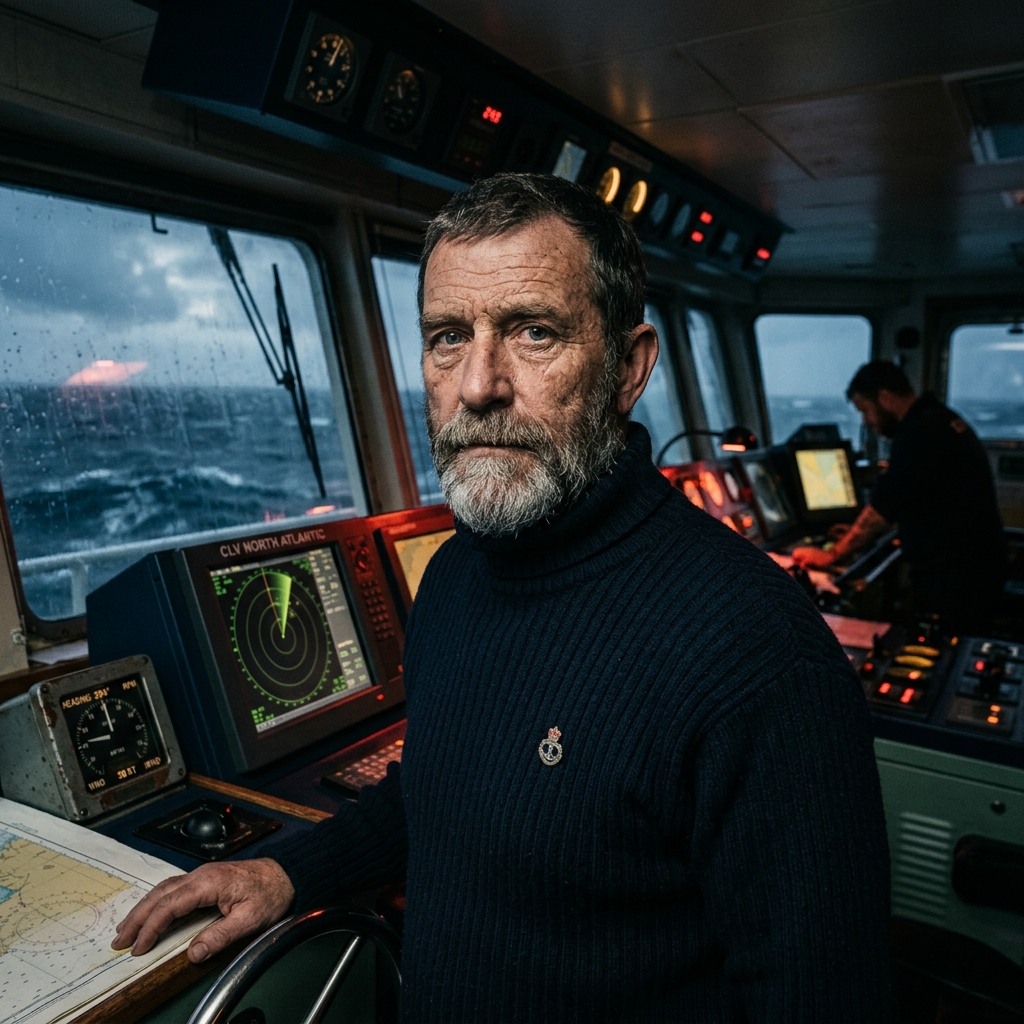
 Master Mariner inspects subsea optical fiber cable on ship deck
Yet, tech conglomerate balance sheets categorize this infrastructure under generic capital expenditure lines, treating maritime transit as a settled commodity rather than an active, volatile frontier of physical security.
There are currently fewer than sixty dedicated cable repair ships in the entire commercial world fleet. More than half of these vessels are over twenty-five years old, operated by crews whose average age exceeds fifty-two. The specialized knowledge required to splice high-voltage ocean conductors in a gale is vanishing from European and American maritime registries, replaced by no one because modern engineering academies have convinced an entire generation that the future belongs exclusively to software prompts and synthetic algorithms.
The Indifference of the Salt Water
At six o'clock this morning, the final joint was vulcanized.
We lowered the repaired bight over the stern sheaves, watching the yellow marker buoy slip under the grey Atlantic foam as forty tons of tension slackened into zero. On the telemetry screen, the green link lights pulsed back to life. Twenty-two terabits of human words, speculative bets, and digital noise resumed their passage through the glass at two hundred thousand kilometers per second.
None of the millions of individuals whose text messages and transactions cleared across the Atlantic at that moment knew that an hour earlier, four men were standing on a slick steel deck in freezing rain with grease up to their elbows, checking a copper weld with a magnifying glass.
The digital world does not exist in an abstract cloud. It exists because human hands repair the copper and steel that rests in the mud beneath the waves.
The ocean does not care about your synthetic intelligence. The ocean only understands hydrostatic pressure, corrosion, and the unyielding physics of the drum.