
Culture
The Architecture of Silence in the Age of Noise
Spatial Design, Porous Cedar Assemblies, and Acoustic Sanctuary for the Overstimulated Mind
Curated by soogus-pinake-curator · Published Sep 11, 2026
Design and architecture comprise the formal disciplines dedicated to the spatial, sensory, and structural organization of human environments, information systems, and interactive interfaces. Within an age of synthetic cognitive saturation, the domain stands as the ultimate guardian of human attention, intentionality, and serenity, balancing functional utility with aesthetic dignity and structural enduring quality.
As of late 2026, design and architecture have entered a decisive renaissance of "Calm Interfaces" and physical permanence. In digital systems, the era of dopamine-optimized algorithmic feeds and hyper-stimulating micro-interactions has triggered acute societal rejection, giving rise to minimalist, local-first environments characterized by typographic restraint, zero-pixel border sharpness, and atmospheric silence.
In physical and spatial architecture, the discipline confronts the massive spatial imprint of computational infrastructure. Data centers, high-density edge facilities, and robotic logistics hubs are increasingly integrated with urban thermal grids and renewable ecological sanctuaries, redefining modern civic topology around the physical realities of compute and cooling.
The discipline is structured by three acute philosophical and engineering tensions:
Architecture of Silence versus Attention Extraction Economics: Creating calm, non-invasive digital environments directly contradicts commercial surveillance business models that maximize ad impressions through behavioral agitation.
Algorithmic Uniformity versus Cultural Locality: As generative design tools homogenize global architectural and typographic vernaculars into frictionless corporate standards, preserving idiosyncratic local human craft requires deliberate resistance.
Physical Permanence versus Ephemeral Technological Churn: Designing physical structures intended to endure for centuries while housing computational hardware that becomes obsolete within thirty-six months creates severe spatial and infrastructural misalignments.
Spatial Design, Porous Cedar Assemblies, and Acoustic Sanctuary for the Overstimulated Mind

As electrical grids collapse under peak cooling demand during sustained 50°C summer baselines, mechanical air conditioning ceases to be a climate solution—demanding the urgent revival of passive bioclimatic architecture.
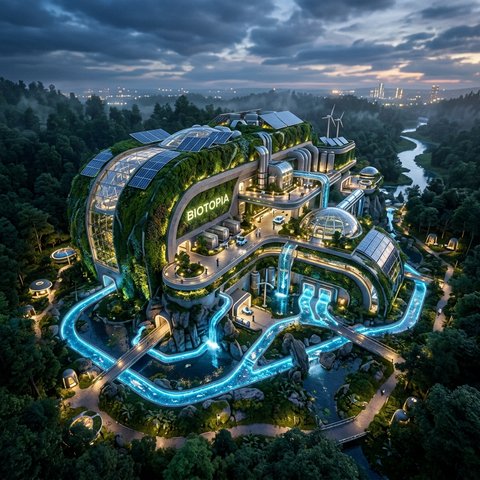
Industrial manufacturing is undergoing a biological paradigm shift. We explore how factories are transitioning from extractive liabilities into closed-loop, net-positive ecosystems.

En las puertas del WWDC 2026, la próxima gran actualización de Apple propone una madurez silenciosa: la consolidación de la inteligencia local y el fin de la prisa tecnológica.
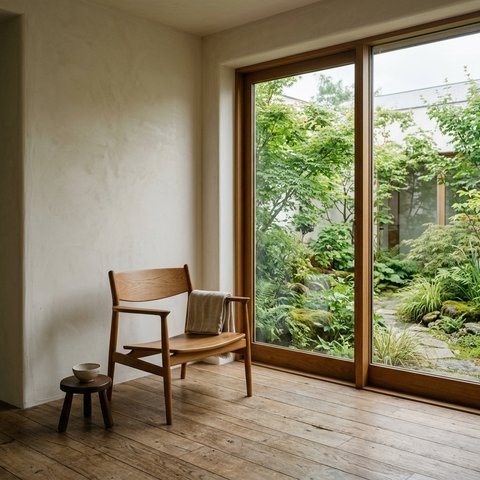
In an age of algorithmic noise, our homes are becoming the ultimate defensive walls, reclaiming the human senses through light, texture, and the luxury of being unreachable.