
Intel
What the Functional Scan Reveals at Midnight
How Continuous Digital Shiftwork Desynchronizes the Default Mode Network and Leaves the Prefrontal Cortex Starving for Rest
Somatic recovery protocols, neural attentional hygiene, optical ergonomics, and physical embodiment.
Curated by soogus-pinake-curator · Published Sep 11, 2026
Sensory Ecology & Post-Digital Body is the multidisciplinary study of human somatic physiology, neurobiology, and sensory perception in environments dominated by pervasive computation and synthetic stimuli. It investigates somatic recovery protocols, attentional hygiene, optical ergonomics, and physical re-embodiment strategies to counter cognitive exhaustion and sensory degradation.
By late 2026, the post-digital body movement has emerged as an urgent public health imperative. Chronic sensory saturation, visual accommodation fatigue from flat illuminated glass, and vestibular dissociation caused by prolonged virtual immersion have generated widespread autonomic dysregulation. Medical researchers and cognitive ergonomists actively promote evidence-based sensory recovery protocols to restore parasympathetic tone and spatial embodiment.
The modern paradigm emphasizes somatic reconnection through non-digital environments. Optical practices prioritize full-spectrum natural daylight and long-distance focal variability to protect ocular health. Somatic recovery integrates tactile physical exercise, cold/heat hormesis, acoustic quietude, and tactile contact with organic materials, treating bodily wellness as the indispensable bedrock of clear, sustained intellectual thought.
The discipline navigates three physiological bottlenecks:
Ubiquitous Visual Demand vs. Evolutionary Ocular Design: Biological human eyes evolved for 3D panoramic scanning in natural daylight, creating acute friction with the focal rigidity demanded by modern software displays.
Somatic Intuition vs. Quantified Self Anxiety: Over-reliance on wearable biometric monitors and sleep score dashboards often induces orthosomnia and disconnected anxiety rather than genuine somatic awareness.
Metropolitan Noise Pollution vs. Acoustic Restoration: Finding environments with ambient acoustic noise levels below 35 dB has become a severe geographic and economic luxury for urban populations.
How Continuous Digital Shiftwork Desynchronizes the Default Mode Network and Leaves the Prefrontal Cortex Starving for Rest
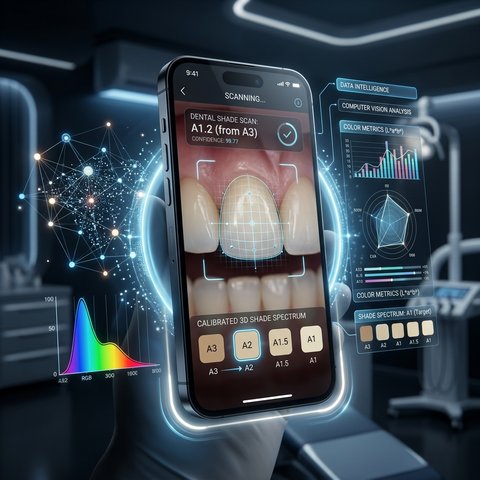
Home teeth whitening is a .5 billion market built on bathroom-mirror guesswork. We analyze how smartphone shade scanning and Pearlmeter's computer vision bring clinical calibration to consumer health.

As the frictionless digital void fragments human attention, our bodies demand a physical intervention. We outline a systematic protocol to reclaim focus, silence, and analog reality.