
Wild Yeasts and Sweet Crumb: Deciphering the Sicilian Brioche and Artisanal Granita Ritual
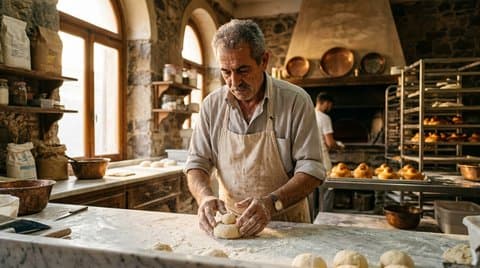
At 5:30 in the morning in the coastal quarters of Catania or Acireale, before the exhaust of motorized scooters fills the narrow alleys of volcanic stone, the air smells of three distinct things: sea salt drifting from the Ionian, toasted almonds roasted over iron plates, and the unmistakable, slightly vinous perfume of fermenting sourdough brioche dough. This is not the sterile, artificially boosted aroma of an industrial supermarket bakery using chemical improvers and fast-acting dry yeast. It is the complex, living bouquet of wild yeasts—Candida humilis and Saccharomyces cerevisiae—working in patient symbiosis with heterofermentative lactic acid bacteria inside a mother dough that has been fed daily across decades.
Across the contemporary Western world, breakfast has been reduced to an act of violent convenience. We tear open foil pouches of extruded grains coated in high-fructose corn syrup, down scalding espresso from plastic pods in sixty seconds while staring into email inboxes, or chew rubbery protein bars wrapped in polypropylene while navigating commuter traffic. We have surrendered the threshold between sleep and labor to the relentless efficiency of the machine.
In eastern Sicily, however, the morning begins with an unhurried, almost sacred ritual of contrast: a warm, cloud-soft, golden sphere of brioche col tuppo served alongside a glass of slowly churned, semi-frozen granita artigianale. To the uninitiated tourist, dipping steaming pastry into crystalline ice seems like a charming regional quirk. To anyone who understands the biophysics of dough and the thermodynamics of ice suspension, it represents one of the most sophisticated achievements in the history of Mediterranean food culture. It is an edible sanctuary of thermal friction, lipid emulsification, and unyielding resistance against the industrialization of human nourishment.
The Chemistry of the Enriched Crumb
Baking an ordinary loaf of sourdough country bread is an exercise in managing a simple matrix: flour, water, salt, and wild fermentation. The starch absorbs water, glutenin and gliadin form an elastic protein network, and yeast produces carbon dioxide that stretches that network into an open, airy crumb.
When you introduce lipids, sugar, and egg yolks to that equation, the physical universe of bread completely changes. Fat is a natural tenderizer; it coats gluten strands, preventing them from linking together. If you add too much fat too early, the gluten structure collapses into a dense, greasy paste that cannot trap gas. To build the featherlight, shreddable, cloud-like crumb of an authentic brioche col tuppo, the baker must execute an intricate thermodynamic dance:
High-Protein Stone-Ground Flours: The base must be a strong wheat flour (traditionally high-W flour milled from durum and ancient soft wheat varieties like Maiorca) with sufficient enzymatic stability to endure eighteen to twenty-four hours of fermentation without gluten degradation.
Cold Lipid Incorporation: Butter and pasture-raised egg yolks cannot be dumped into the mixer at the beginning. The flour and sourdough starter must first develop a strong, translucent gluten windowpane. Only then are chilled butter cubes incorporated gradually, drop by drop, allowing the lipids to emulsify within the aqueous gluten web without breaking it.
The Emulsifying Power of Lecithin: Egg yolks provide not only golden color and rich flavor, but natural phospholipids (lecithin) that stabilize the fat-water emulsion. When baked, these lipids liquefy, coating the crumb in microscopic pockets of moisture that remain velvety and tender even when cooled.
THE BRIOCHE LIPID MATRIX:
[Gluten Web Developed]
+ (Gradual Cold Butter & Egg Yolk Influx)
---> [Phospholipid-Stabilized Emulsion]
---> [Micro-Perforated Elastic Web]
---> [Shreddable, Cloud-Soft Sweet Crumb]
When you tear into a properly executed Sicilian brioche, the bread does not crumble like industrial cake. It pulls apart in gossamer-thin, buttery threads, releasing a delicate cloud of citrus blossom water, orange zest, and wildflower honey. It holds its structural integrity without ever feeling heavy on the palate.
The Architectural Anatomy of the Tuppo
Every physical object produced by centuries of folk culture carries a structural rationale, and the distinctive geometry of the Sicilian brioche is no exception. Named after the traditional chignon or low bun (tuppo) worn by Sicilian women in the nineteenth century, the pastry consists of a large, spherical base crowned by a smaller, tightly rolled sphere of dough nestled on top.
This is not merely decorative pastry architecture; it serves an indispensable functional purpose in the ritual of eating:
The Ritual Detachment: The small top knot (il tuppo) is plucked off first with the fingers. It serves as the ceremonial first bite—the crispy, caramelized outer shell that has received the most direct radiant heat from the oven roof.
The Precision Spoon: In traditional Sicilian café culture, one never approaches a dish of artisanal granita with a metal spoon if a brioche is present. The tuppo acts as a natural, edible scoop. Dipping its warm, absorbent interior into the cold, dense granita creates an instantaneous physical contrast on the tongue: the blistering warmth of oven-caramelized wheat colliding with the silky, sub-zero chill of almond or lemon ice.
The Reservoir of Absorption: Once the tuppo has been eaten, the soft, tearable base of the brioche is pulled apart piece by piece to absorb the melting granita as it transforms from dense crystalline slush into rich, creamy emulsion.
"The tuppo is not an ornament. It is an edible instrument designed to bridge the thermal abyss between fire and ice."
The Thermodynamics of True Granita
To understand the beauty of the Sicilian morning ritual, one must also banish the modern bastardization of granita. In tourist traps and fast-food kiosks across Europe and the Americas, what passes for 'granita' is a brightly colored, neon-chemical slush pumped from noisy plastic machines—crushed tap water ice bathed in artificial syrups, synthetic dyes, and xanthan gum stabilizers.
Authentic granita artigianale, by contrast, is a triumph of manual thermodynamics that dates back to the Arab domination of Sicily in the ninth century. The Arabs introduced sherbet, a chilled fruit drink that Sicilian locals learned to freeze using snow harvested from the volcanic crevices of Mount Etna. The snow was stored in deep underground volcanic stone caves (niviere) throughout the winter and retrieved during the blistering Mediterranean summer to freeze sweetened fruit infusions.
True granita requires three foundational pillars:
Minimalist Solute Chemistry: True granita contains only three ingredients: mountain spring water, unrefined cane sugar, and raw botanical essence—either freshly squeezed lemons from the groves of Siracusa, wild mountain blackberries (frutti di bosco), or finely stone-ground paste made from the celebrated Pizzuta d'Avola almonds.
Controlled Sugar Concentration (Brix Scale): Sugar is not merely a sweetener in granita; it is a freezing point depressant. If the sugar content is too low, the water freezes into hard, sharp, jagged shards of ice that lacerate the palate. If the sugar content is too high, the mixture refuses to freeze into a solid state, remaining a sticky syrup. The artisan balances the liquid precisely between 18° and 22° on the Brix scale.
The Manual Shear of Slow Churning: Traditional granita was frozen in a double-walled copper vessel (pozzetto) buried in a wooden bucket packed with salt and ice. As the outer layer began to freeze, the artisan constantly scraped and sheared the icy walls with a broad wooden paddle. This constant mechanical agitation prevents large ice crystals from forming, producing tiny, velvety, microscopic flakes of ice that melt instantly across the tongue like liquid silk.
+-----------------------------------------------------------------------+
|                 AUTHENTIC GRANITA VS. INDUSTRIAL SLUSH                 |
+-----------------------------------------------------------------------+
|  ARTISANAL SICILIAN GRANITA          |  COMMERCIAL INDUSTRIAL SLUSH   |
|  --------------------------          |  ---------------------------   |
|  - 3 ingredients: water, sugar, fruit|  - Artificial syrups & dyes    |
|  - Natural almond/citrus emulsion    |  - Xanthan gum stabilizers     |
|  - Balanced Brix freezing depression |  - Pre-crushed tap water ice   |
|  - Microscopic crystalline shear     |  - Coarse, abrasive ice shards |
|  - Scented with Etna citrus blossoms |  - Monosodium glutamate / corn |
|  - Melts into silky cream on tongue  |  - Leaves chemical aftertaste  |
+-----------------------------------------------------------------------+
When made with Avola almonds, authentic granita is not even white; it is an opaque, ivory emulsion carrying the subtle, marzipan-rich bitterness of raw almond oil, punctuated by a delicate crown of unsweetened whipped cream (panna).
Thermal Resistance: The Philosophy of the Morning Pause
Why does this pairing endure with such fierce devotion among Sicilians while the rest of the global economy hurtles toward pre-packaged breakfast shakes and caffeinated energy gummies?
Because the ritual of brioche con granita cannot be rushed. It is physically impossible to consume it while walking down the street or checking stock portfolios on a smartphone. The moment you place a cold dish of granita next to a warm brioche, an inexorable thermodynamic clock begins to tick. If you ignore the granita, it melts into a puddle. If you ignore the brioche, it cools and loses its supple elasticity.
The ritual demands total presence. You must sit down at a shaded marble café table under the awning. You must observe the morning light. You must feel the temperature of the brioche in your fingers, tear the tuppo, dip it into the ice, and let the shock of cold almond milk and warm butter coat your sensory receptors. For twenty minutes, you are not a data point in a platform economy; you are an embodied human animal participating in an ancestral Mediterranean celebration of wheat, fruit, and ice.
Reclaiming the Sacred Table
In an age dominated by synthetic algorithms, automated content farms, and synthetic sensory substitutes, true rebellion does not require retreating into ascetic isolation. True rebellion consists of defending the physical dignity of our senses.
It means honoring the baker who wakes up at two in the morning to feed a wild starter that will not be ready for another ten hours. It means refusing the lifeless convenience of processed food products manufactured in windowless industrial facilities thousands of kilometers away. It means insisting that the first action of our waking day should be an encounter with real textures, real aromas, and real human craftsmanship.
The next time you find yourself reaching for a factory-sealed breakfast bar or gulping down an unconsidered coffee on your way to an algorithmic feed, remember the baker in Catania dusting Carrara marble with flour at dawn. Remember that life is measured not by how quickly we can process calories, but by how deeply we can inhabit the warmth of the crumb and the coldness of the ice. Load the flour into the bowl. Feed the sourdough starter. Wait for the dough to rise. The machine can generate millions of words and images, but it will never taste the salt of the sea, the sweetness of the almond, or the eternal comfort of freshly baked bread.