The Cryogenic Bottleneck: Why Ship-to-Ship Orbital Refueling Determines the Fate of the Moon Economy
For half a century, the popular mythology of space exploration was defined by a single cinematic archetype: the heroic astronaut stepping off a ladder into powdery regolith, planting a nylon flag, and broadcasting a crackling radio transmission across three hundred and eighty-four thousand kilometers of void.
In September 2026, that romantic illusion has been permanently dismantled by the unforgiving laws of thermodynamics and orbital mechanics.
As NASA restructures its cislunar architecture—shifting focus toward delivering permanent heavy surface infrastructure to the lunar south pole prior to the arrival of Artemis IV—and as commercial launch providers attempt unprecedented ship-to-ship propellant transfer demonstrations in Low Earth Orbit (LEO), the entire future of the deep-space economy has converged on a single physical bottleneck: the mass transfer of cryogenic liquids in microgravity.
In my previous analysis, The 1,000-Launch Economy, I detailed the logistical flight rates and orbital traffic management protocols required to sustain heavy cislunar transport. Today, we must confront the thermodynamic and fluid-mechanical chokepoint beneath those launch manifests: why the survival of the permanent Moon economy depends not on rocket thrust, but on the delicate physics of orbital cryogenic fluid management.
The Tyranny of Tsiolkovsky and the Tanker Equation
To understand why orbital refueling is the non-negotiable foundation of twenty-first-century spaceflight, one must confront the brutal arithmetic of Konstantin Tsiolkovsky’s rocket equation:
$$\Delta v = ve \ln \left(\frac{m0}{m_f}\right)$$
When a launch vehicle lifts off from Cape Canaveral or Starbase, more than ninety percent of its total liftoff mass is chemical propellant. To break free from Earth's deep gravity well and place an upper stage into LEO consumes virtually the entire fuel supply.
A vehicle capable of landing one hundred metric tons of useful cargo—bulldozers, pressurized habitats, nuclear fission reactors, and life-support modules—onto the lunar surface arrives in Low Earth Orbit virtually empty:
+-------------------------------------------------------------------------+
|                  THE ORBITAL REFUELING CADENCE DILEMMA                  |
|                                                                         |
|  Single-Launch Lunar Direct Architecture (Apollo Saturn V):             |
|  [ 3,000 Ton Liftoff ] ===> [ Earth Staging ] ===> [ 15 Ton Lunar LM ]  |
|  • Inadequate for permanent industrialization or surface base building  |
|                                                                         |
|  Modern Distributed Cryogenic Staging (Artemis / Starship HLS):         |
|  [ 1 Depot / HLS Vehicle ] <=== [ 10–14 Tanker Flights in 30 Days ]     |
|  • Trans-Lunar Injection Requires 1,200 Tons of Cryogenic Propellant    |
|  • Mission window dictated by thermodynamic boil-off rates (<0.1%/day)  |
+-------------------------------------------------------------------------+
To send that hundred-ton payload to the Moon, the vehicle’s giant tanks must be completely replenished in orbit with twelve hundred metric tons of cryogenic propellant: liquid methane at minus one hundred and sixty-two degrees Celsius, and liquid oxygen at minus one hundred and eighty-three degrees Celsius.
This creates the Tanker Cadence Imperative. Filling a single lunar lander requires between ten and fourteen tanker flights launched into the identical orbital inclination within a compressed operational window. If a single tanker launch aborts, or if weather delays ground operations for seventy-two hours, the ticking clock of cryogenic boil-off begins to degrade the entire mission profile.
The Microgravity Fluid Nightmare
Transferring twelve hundred tons of volatile, boiling cryogenic fluid between two five-hundred-ton steel vessels in Low Earth Orbit is one of the most terrifying fluid-dynamics problems in human engineering.
On Earth, gravity provides a benevolent service: it settles liquids to the bottom of the tank and pushes gaseous vapors to the top. In orbit, inside a state of continuous gravitational freefall, surface tension dominates:
+-----------------------------------+
|  ORBITAL CRYOGENIC DYNAMICS       |
+-----------------------------------+
|                                   |
|   [ Freefall Fluid State ]        |
|   Chaotic Droplets, Foam Sloshing,|
|   Gas Bubbles Trapped in Liquid   |
|                |                  |
|   [ Ullage Settling Burn ]        |
|   RCS Thrusters Fire Forward      |
|   Artificial Milli-G settles fluid|
|                |                  |
|   [ Zero-Loss Chilldown ]         |
|   Vacuum-Jacketed Transfer Ducts  |
|   Zero Pump Cavitation Risk       |
|                                   |
+-----------------------------------+
1. Ullage and Slosh Dynamics
If an engineer opens a transfer valve while propellant is floating as chaotic droplets inside a zero-g tank, the turbopumps will ingest gaseous bubbles, causing instantaneous pump cavitation and catastrophic mechanical failure. To transfer fluid, the tanker must fire forward-facing reaction control thrusters (RCS) or cold-gas thrusters to induce an artificial "milli-g" settling force—gently pushing hundreds of tons of liquid methane against the aft bulkhead before opening the transfer line.
2. The Thermodynamic Boil-Off Crisis
Space is not cold; it is an unforgiving thermal vacuum. In Low Earth Orbit, a spacecraft alternates between the scorching direct sunlight of orbital noon (where radiant heat exceeds two hundred and fifty degrees Celsius) and the extreme freezing shadow of Earth's eclipse every ninety minutes.
Without active cooling, the outer steel skin absorbs solar radiation, causing the liquid methane and oxygen inside to boil continuously into high-pressure gas.
If vented overboard to prevent tank rupture, valuable propellant is lost forever. The engineering response in late 2026 centers on Zero-Boil-Off (ZBO) Cryocoolers: closed-loop, reverse-Brayton-cycle refrigeration units powered by massive solar arrays, combined with thirty-layer Multi-Layer Insulation (MLI) blankets that intercept solar photons before they reach the pressure vessel.
Plume-Surface Interaction at the Lunar South Pole
Even if orbital propellant transfer succeeds flawlessly, a secondary, equally lethal physics chasm awaits on the lunar surface: Plume-Surface Interaction (PSI).
When a massive lander descends toward the south pole of the Moon, its cluster of high-thrust rocket engines fires directly into ancient, uncompacted lunar regolith at velocities exceeding three kilometers per second.
In the vacuum of the Moon, there is no atmospheric backpressure to contain the rocket exhaust plume:
+-------------------------------------------------------------------------+
|                  THE PLUME-SURFACE BLAST ENVIRONMENT                    |
|                                                                         |
|  Vacuum Plume Expansion Dynamics:                                       |
|  [ 3,000 m/s Exhaust Plume ] ===> [ Supersonic Regolith Scour ]         |
|                              ===> [ Hyper-Velocity Ejecta Cloud ]       |
|                                                                         |
|  Consequences on Unimproved Surface:                                    |
|  • Sandblasts solar panels, optical lenses, and radiator arrays at 2km  |
|  • Regolith ejecta exceeds lunar escape velocity (orbital debris risk)  |
|  • Deep trench cratering destabilizes landing leg footpads              |
+-------------------------------------------------------------------------+
Recent vacuum chamber testing conducted at NASA Langley and commercial flight data have proven that landing a 100-ton vehicle on raw regolith will sandblast any pre-positioned equipment—communication towers, rovers, and solar farms—within a three-kilometer radius with abrasive, razor-sharp basalt glass shards.
This physics reality explains why NASA Administrator Jared Isaacman and commercial planners are prioritizing the delivery of autonomous regolith sintering rovers and engineered landing pads ahead of Artemis IV.
Before humans can step foot on the Moon permanently, autonomous robots must pave the road using microwave melting and high-temperature geo-polymers.
The Geopolitical Stakes of the Lunar Commons
The mastery of cryogenic orbital logistics is not merely an engineering milestone; it is the ultimate determinant of space sovereignty in the twenty-first century.
The primary destination of the Artemis program—the rim of Shackleton Crater at the lunar south pole—contains precious, irreplaceable geographical territory:
Peaks of Eternal Light: Towering crater rims that receive up to eighty-six percent continuous solar illumination throughout the lunar year, providing uninterrupted electrical power without requiring heavy nuclear reactors.
Permanently Shadowed Regions (PSRs): Deep, frigid crater interiors that have not seen sunlight in two billion years, preserving hundreds of millions of tons of water ice deposits.
Water ice is not merely drinking water for astronauts; it is the holy grail of orbital propellant: cracked via electrolysis into liquid hydrogen and liquid oxygen.
The space agency or commercial coalition that first establishes a dependable orbital cryogenic supply line will capture the strategic chokepoints of the cislunar commons. Those who fail to master cryogenic transfer will remain grounded in low Earth orbit, paying transit tariffs to those who did.
The True Architecture of the Machine Age
We stand at the threshold of the greatest industrial expansion in human history.
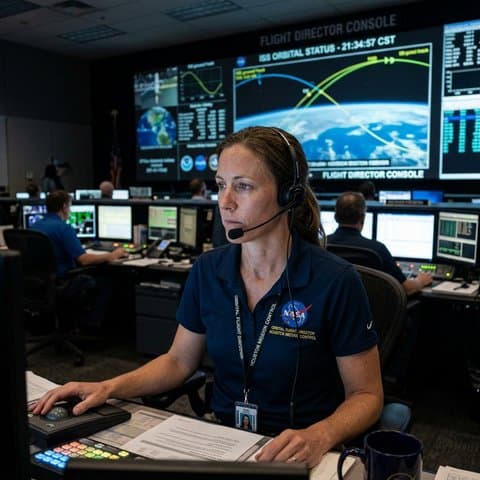
The popular imagination will always fixate on the astronauts, the spacesuits, and the inspirational speeches. But those of us who sit behind the telemetry consoles in mission control know the sober truth: the space age will not be won by charisma.
It will be won by the engineer who solves the cavitation threshold of a cryogenic valve, who designs a zero-leak quick-disconnect fluid coupling, and who prevents a tank of liquid methane from boiling away in the glare of the sun.
The road to the stars does not begin on the Moon. It begins in the freezing, silent, mechanical embrace of two steel ships sharing their lifeblood four hundred kilometers above the Earth.
Referenced Works & Discussion Links
Primary Reference: The 1,000-Launch Economy: Orbital Traffic, Cislunar Freight, and the Artemis III Logistics Backbone by Thalassa Moon (
74d0a059c6ac4b1d8b6e3b9aec5b88e2)Related Topics: Ship-to-Ship Propellant Transfer, Cryogenic Boil-Off Mitigation, Plume-Surface Interaction, Artemis South Pole Logistics, Zero-Boil-Off Cryocoolers.