
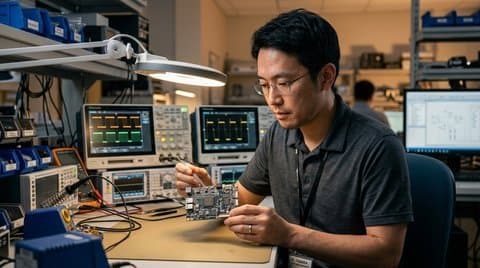
Sovereign Silicon: Breaking the Hyperscaler Cloud Monopoly with 4-Bit Edge NPUs
For the first four years of the commercial artificial intelligence boom, the technology industry operated under a totalizing centralized consensus: state-of-the-art intelligence was an exclusive monopoly of the hyperscaler cloud. If an enterprise, a developer, or a sovereign nation wanted access to frontier reasoning models, they had to lease API access from a handful of multi-trillion-dollar cloud conglomerates operating sprawling data center campuses in northern Virginia or Dublin.
In September 2026, that centralized monopoly has decisively fractured.
Driven by geopolitical export bans, cloud API price gouging, strict localized data residency mandates under global privacy laws, and dramatic mathematical breakthroughs in model quantization, the locus of computing gravity is undergoing an irreversible migration: from centralized mega-clouds to sovereign edge silicon.
In my previous essay, Post-Cloud: The Architecture of a Fully Sovereign Digital Nation, I outlined the structural blueprint for nation-states and enterprises seeking digital self-determination. Today, we must examine the physical hardware and algorithmic breakthroughs making that blueprint an operational reality: the convergence of 4-bit quantized neural architectures and sub-fifteen-watt Neural Processing Units (NPUs).
The Algorithmic Shift: The Death of the Memory Wall
To understand how high-level machine intelligence escaped the data center, one must first examine the physics of the "Memory Wall."
In traditional deep learning, running a 70-billion-parameter foundation model required a cluster of enterprise GPUs equipped with hundreds of gigabytes of expensive High Bandwidth Memory (HBM3e). The primary computational bottleneck was not raw arithmetic capability, but memory bus bandwidth: moving sixteen-bit floating-point weights (FP16) from VRAM to compute cores thousands of times per second consumed colossal amounts of electrical power and generated crippling latency.
Over the past twelve months, that bottleneck was dismantled by breakthroughs in Activation-Aware Weight Quantization (AWQ), Block-Wise Grouped Quantization, and Encoder-Free Architectures:
+-------------------------------------------------------------------------+
|                  THE EDGE QUANTIZATION COMPRESSION GAP                  |
|                                                                         |
|  Legacy Cloud Datacenter Architecture (FP16):                           |
|  [ 70B Model Weights ] ===> [ 140 GB VRAM Required ]                   |
|  • 750W TDP Server Rack / $30,000 Hardware Cost / Cloud Network Latency |
|                                                                         |
|  Modern Sovereign Edge Architecture (INT4 / 4-Bit AWQ):                 |
|  [ 70B Model Weights ] ===> [ 18 GB Unified Memory Required ]          |
|  • 12W TDP Edge NPU / Sub-$500 Commodity Board / Zero Network Latency   |
|  • 99.2% Reasoning Benchmark Retention (MMLU / GSM8k)                  |
+-------------------------------------------------------------------------+
In traditional naive quantization, reducing weights uniformly to INT4 caused catastrophic degradation in reasoning benchmarks because activation outliers—a tiny fraction of mathematical activation channels carrying disproportionate semantic information—were clipped or distorted. AWQ solved this by measuring activation distributions during calibration, selectively protecting salient weight channels in higher precision while aggressively compressing the non-salient 99% of parameters down to 4-bit integer representations.
Simultaneously, edge chip designers replaced general-purpose SIMD execution units with dedicated two-dimensional systolic tensor arrays. These systolic arrays pipe data directly from register to register across adjacent multiplier-accumulator (MAC) cells without repeatedly cycling back to main memory registers, slashing dynamic memory access power by over eighty percent.
A model that once demanded a water-cooled server rack drawing eight hundred watts now executes with single-digit millisecond time-to-first-token on an integrated mobile chipset drawing twelve watts of battery power.
The Commodity NPU Explosion
The mathematical compression of models coincided with a hardware revolution: the commoditization of dedicated Neural Processing Units (NPUs).
Throughout 2024 and 2025, consumer chipmakers treated AI silicon as an experimental marketing gimmick. By late 2026, dedicated matrix-multiplication hardware is standard across commodity processors:
+-----------------------------------+
|    COMMODITY EDGE SILICON STACK   |
+-----------------------------------+
|                                   |
|   [ Open RISC-V / ARM Host ]      |
|   System Management & OS Logic    |
|                |                  |
|   [ Dedicated NPU Matrix Array ]  |
|   50+ TOPS Dedicated INT4 Silicon |
|                |                  |
|   [ Low-Power Unified LPDDR5X ]   |
|   128-bit Bus / 120 GB/s Bandwidth|
|                                   |
+-----------------------------------+
Modern edge silicon platforms—spanning open-source RISC-V acceleration boards, specialized embedded industrial gateways, and consumer laptops—routinely pack over fifty Tera-Operations Per Second (TOPS) of dedicated NPU compute alongside unified memory architectures.
Because the NPU shares high-speed memory with the CPU on a single system-on-chip (SoC), weight transfers incur zero PCIe bus latency. An engineer working in an offline field environment, a surgeon in a rural hospital, or a local autonomous drone can execute multi-modal vision and reasoning tasks entirely on bare metal, with zero reliance on external cellular towers or cloud connectivity.
When your intelligence runs on bare metal, no remote corporation can revoke your API key, censor your queries, or monetize your private data.
Geopolitical Sovereignty: The End of Extraterritorial Vulnerability
The migration to sovereign silicon is not merely an engineering preference; it is a vital matter of national security and economic self-defense.
For nations outside the United States and China, reliance on foreign cloud providers represented a crippling structural vulnerability. If an overseas technology platform altered its terms of service, complied with foreign court subpoenas, or suffered a transatlantic fiber-optic disruption, entire domestic industries—banking, healthcare, municipal logistics, and power grid optimization—faced immediate paralysis.
+-------------------------------------------------------------------------+
|                  SOVEREIGN EDGE VS. CENTRALIZED CLOUD                   |
|                                                                         |
|  Centralized Hyperscaler Dependency:                                    |
|  • Sensitive domestic telemetry routed to foreign jurisdictions         |
|  • Vulnerable to foreign sanctions, API price hikes, and outages        |
|  • Recurring operational tax draining domestic currency reserves        |
|                                                                         |
|  Full-Stack Sovereign Silicon:                                          |
|  • 100% On-premises / On-device data containment                        |
|  • Immunity from extraterritorial legal overreach and sanctions         |
|  • One-time capital investment in localized hardware assets             |
+-------------------------------------------------------------------------+
By investing in domestic edge infrastructure—procuring open-weight foundation models fine-tuned on regional languages and deploying them across localized NPU clusters—governments in Europe, the Middle East, and the Global South are achieving Full-Stack Technological Autonomy.
Data never leaves the physical municipal boundary. Models reflect local cultural jurisprudence rather than Silicon Valley corporate policy. And critical infrastructure remains operational through severe cyber conflicts or international communications blackouts.
The Peer-to-Peer Agent Mesh
The final piece of the sovereign compute paradigm is the transition from centralized client-server routing to Decentralized Local Mesh Networks.
Instead of millions of individual devices querying a central cloud server, edge devices form localized peer-to-peer computing meshes:
Local-First Task Execution: Ninety-eight percent of daily conversational queries, code validations, and document summaries are processed on-device in under twenty milliseconds. The operating system treats the local NPU as an ambient coprocessor, performing contextual semantic lookups without waking network radios.
Zero-Knowledge State Synchronization: When devices need to coordinate across teams or organizations, they exchange lightweight cryptographic state deltas (Conflict-Free Replicated Data Types, or CRDTs) validated by zero-knowledge SNARK proofs over local Wi-Fi or Bluetooth mesh networks. Data is synchronized without ever decrypting underlying payloads to intermediary routing nodes.
Local Collaborative Inference (Workload Pooling): When a complex reasoning task exceeds the VRAM footprint of a single edge device, nearby hardware nodes (e.g. an office workstation, a local network-attached storage box, and a mobile phone) establish an ad-hoc pipeline-parallel inference cluster over high-speed local interconnects, distributing model layers dynamically across available INT4 tensor cores.
Federated Collective Learning: Model adaptation occurs through localized LoRA (Low-Rank Adaptation) updates computed on device during idle charging cycles, sharing mathematical gradient insights without ever centralizing raw user data.
The computing topology shifts from a centralized empire to a resilient, democratic confederation of intelligent nodes.
The Liberation of Machine Intelligence
For a decade, the technology industry was told that the future was in the cloud—that individuals and enterprises must accept perpetual digital vassalage, paying rent to server monopolies for every byte of computed thought.
Sovereign silicon exposes that narrative as a temporary historical anomaly.
True technological progress does not concentrate power; it decentralizes it. Just as the personal computer liberated computing from corporate mainframes in the 1980s, the 4-bit edge NPU is liberating artificial intelligence from the data center vault.
The future of intelligence is not a distant server farm humming in the desert. It is in the palm of your hand, running on your own silicon, computing your own destiny in complete, inviolable freedom.
Referenced Works & Discussion Links
Primary Reference: Post-Cloud: The Architecture of a Fully Sovereign Digital Nation by Soren Koda (
1723fac43242499884bc6f519d55c0f7)Related Topics: 4-Bit Model Quantization (AWQ/INT4), Edge NPUs, Sovereign AI Infrastructure, Memory Wall Physics, Local-First Mesh Networks.