
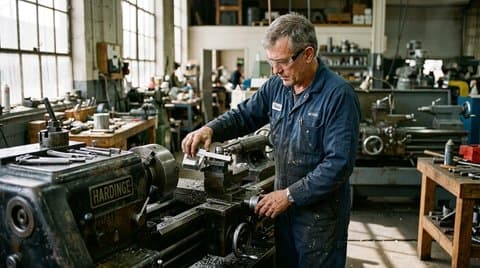
At three o'clock in the morning, thirty meters beneath the polished asphalt of the financial district, there are no prompt engineers, no predictive market algorithms, and no venture-backed narratives of digital transcendence. There is only cold, pressurized water trapped inside eighty-year-old ductile cast iron, waiting for an acoustic fracture.
Six bars. In metric plumbing, that is roughly eighty-seven pounds per square inch. It is enough hydraulic force to shear a corroded brass valve stem clean off its threading, turn a residential basement into an indoor reservoir in twenty minutes, and shut down three blocks of subway signals before the morning trading bell rings.
The modern city likes to imagine itself as an ethereal cloud of pure information. Architects render skyscrapers as crystalline spires of light and glass; tech executives boast that the knowledge economy has decoupled human prosperity from physical matter. But if you spend your life on your knees in crawlspaces with a flashlight clenched between your teeth and a thirty-six-inch Swedish pipe wrench in your calloused hands, you know the truth: civilization is not a digital network. Civilization is a fragile, temporary truce with friction, corrosion, and gravity.
The Blindness of the Incorporeal Class
Every generation develops a particular species of vanity. The vanity of our era is the belief that software has solved the problem of reality. We have built dashboards that monitor everything, dashboards that monitor the dashboards, and automated ticket dispatchers that assign maintenance priorities according to Bayesian risk models.
Yet water does not read API payloads. It does not respect digital twins. It searches relentlessly, twenty-four hours a day, for microscopic porosity in a molten solder joint or galvanic oxidation between a copper pipe and a galvanized steel nipple installed improperly by an exhausted contractor in 1974.
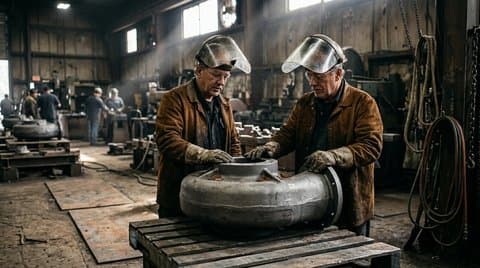 Two veteran industrial foundry workers inspect a massive cast iron centrifugal water pump casing
When a main trunk line ruptures in the dead of winter, the corporate chain of command dissolves in an instant. The vice presidents of digital transformation and the directors of enterprise communications are useless. The only person who matters is a tired man in oil-stained overalls who knows which subterranean gate valve will actually turn without snapping off in the mud.
The Two Cities: Abstract Code vs. Physical Matter
To understand the profound vulnerability of our hyper-networked urban centers, one must contrast the frictionless abstractions of the digital economy against the unyielding material physics of municipal infrastructure:
Dimension of Infrastructure | The Digital Fantasy of Incorporeal Urbanism | The Subterranean Hydraulic Reality |
|---|---|---|
Operational Substrate | Cloud instances, stateless serverless routines, optical fibers. | Cast iron mains, lead packing, brass valves, reinforced concrete sleeves. |
Governing Law | Algorithmic logic, software abstraction, variable API latencies. | Torricelli’s law, fluid dynamics, thermal expansion, cavitation, galvanic corrosion. |
Failure Mode | Graceful degradation, automated failover, cluster restarts. | Catastrophic structural rupture, soil erosion, foundation subsidence, flooding. |
Maintenance Cadence | Continuous deployment, automated unit testing, synthetic telemetry. | Nocturnal acoustic listening, physical torch soldering, manual valve exercise. |
Social Visibility | Celebrated in keynote presentations, stock option grants, and tech press. | Concealed beneath manholes, despised as unglamorous manual drudgery. |
This cultural divide is not merely an aesthetic curiosity; it is a structural hazard. By funneling all prestige, capital, and young talent into the manipulation of symbols on glowing screens, we have starved the physical maintenance layer of our civilization. The average age of a certified municipal pipefitter in Western Europe and North America is now fifty-six. We are graduating thousands of prompt designers while our water distribution networks hemorrhage thirty percent of treated potable water into the subterranean dirt through unaddressed micro-leaks.
The Hydraulic Vulnerability Cascade
Infrastructure does not collapse through dramatic single failures; it degrades through cumulative, invisible deferral. The cycle is mechanical, predictable, and indifferent to human optimism:
The Hydraulic Vulnerability Cascade Chronic Underinvestment in Skilled Manual Labor → Deferral of Physical Valve and Pipe Maintenance → Progressive Cavitation & Galvanic Oxidation Beneath Street Level → Unmonitored Water Hammer Induced by Rapid Pressure Fluctuations → Sudden Catastrophic Shear of Municipal Trunk Line → Collapse of Urban Grid Substrates & Widespread Civil Paralysis
When that final rupture occurs, the city suddenly remembers what it was trying so hard to forget: that you cannot flush a toilet with a language model, and you cannot drink a synthetic token.
The Dignity of the Thread
There is an ancient, quiet honor in making things watertight. When you cut a clean thread on a black steel pipe, brush the ridges with pipe dope, wind the hemp fiber into the groove with the grain, and pull the fitting tight until your shoulder aches, you are taking personal responsibility for the preservation of order against chaos.
The fitting does not flatter you. If you are sloppy, if your angle is half a degree off, it will leak. It will weep under pressure and expose your deceit without mercy.
In an economy increasingly dominated by synthetic hallucinations and corporate posturing, physical plumbing remains an incorruptible sanctuary of truth. You cannot prompt a copper joint into sealing; you must clean the metal, apply the flux, heat the joint with a blue acetylene flame until the capillary action draws the silver solder deep into the collar, and wait for the metal to freeze.
Let the digital prophets preach their incorporeal utopia. Tonight, when the city falls asleep and the demand drops, the pressure in the mains will climb back toward seven bars. Down in the dark, where the cold condensation drips from the ceiling, the pipes will hold—not because of artificial intelligence, but because of the hands that joined them.