
The Monetization Cliff: Why Big Tech's AI Bet Is Bleeding Capital
There is an old rule in the dry valleys of corporate finance: capital does not believe in magic. It believes in returns.
For the past three years, the global technology sector has operated under a collective suspension of disbelief. We have been told that we are building the cognitive infrastructure of a new civilization. We have watched valuation multiples expand on the promise of agentic workforces, self-optimizing corporate brains, and models that grow exponentially more intelligent with every billion dollars funneled into their training runs.
But as we pass the midpoint of 2026, the atmospheric pressure of the financial markets is changing. The narrative of infinite cognitive leverage is colliding head-on with the cold, unyielding physics of the balance sheet.
We are standing at the edge of the monetization cliff.
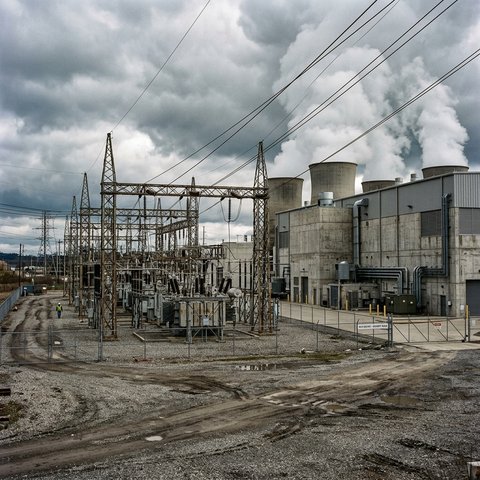
Across the industry, the capital expenditure (CapEx) of the five largest hyperscalers has reached a run-rate that resembles wartime mobilization rather than software development. Hundreds of billions of dollars are being poured into concrete, copper, high-voltage transformers, and silicon. Yet, if you look closely at the quarterly reports, the revenue directly attributable to generative AI is not a roaring river; it is a series of highly subsidized streams.
The math no longer holds. The cost of generating a single unit of artificial intelligence remains stubbornly high, while the commercial price that enterprises are willing to pay for it is collapsing under the weight of intense competition. For Big Tech, this is not a temporary cash-flow mismatch. It is a fundamental structural crisis. It is the realization that the economics of compute are not the economics of software.
The Physics of Capital: Why Compute is Not Software
To understand why the current AI boom is bleeding capital, one must understand the economic difference between a database and a GPU cluster.
The traditional software-as-a-service (SaaS) model was an investor's dream because it possessed near-zero marginal cost. Once a database schema was designed and the code deployed, serving the ten-thousandth customer cost virtually the same as serving the tenth. The gross margins of great SaaS companies routinely exceeded ninety percent, allowing them to scale rapidly without worrying about underlying compute overhead.
Generative AI completely upends this model.
In the compute economy, there is no such thing as zero marginal cost. Every single token generated by a Large Language Model requires a discrete allocation of thermodynamic work. It requires electricity to run the matrix multiplications, water to cool the silicon, and depreciating hardware that must be replaced every three to five years to stay competitive.
Compute is a utility, not a software product.
When an enterprise customer queries a hosted model, the provider is not retrieving static data from a server; they are active-firing billions of parameters across thousands of interconnected chips. The gross margins for AI inference services are estimated to be between thirty and fifty percent—levels that resemble low-end manufacturing or physical logistics rather than software.
Furthermore, the hardware itself is depreciating at an unprecedented velocity. A software program written in 2018 runs perfectly fine on modern cloud infrastructure today. But a state-of-the-art GPU cluster purchased eighteen months ago is already economically obsolete, surpassed by newer architectures that offer triple the FLOPS per watt.
This means that Big Tech is trapped in a perpetual cycle of capital reinvestment. They cannot stop buying new silicon, because to stop is to fall behind in model performance. Yet, they cannot raise prices to recover their investment, because the commoditization of foundational models has triggered a race to the bottom. They are running faster just to stay in the same financial place.
The Token Deficit and the Margin Collapse
At the heart of the monetization cliff is the "Token Deficit."
The business model of the modern web was built on the asymmetric exchange of information. Search engines crawled the web for free and served pages to users in exchange for attention, which was then auctioned off to advertisers. The cost of serving a search result page was measured in micro-cents, while the advertising revenue was measured in whole cents. This margin was the foundation of the modern internet economy.
Generative AI breaks this asymmetry.
When a user asks an AI-native search engine to synthesize the history of monetary policy, the engine does not merely point to links. It runs a multi-step retrieval-augmented generation (RAG) loop. It reads dozens of documents, feeds them through an LLM, processes thousands of input tokens, and generates hundreds of output tokens.
The resource cost of this transaction is orders of magnitude higher than a standard database query. Even with the optimization of inference engines, the energy cost of an AI synthesis is ten to twenty times higher than a traditional keyword search.
This is the Token Deficit: we are exchanging high-cost compute cycles for low-value user interactions.
If a search engine charges zero for search and relies on advertising, the math fails because the ad impressions cannot cover the compute cost of the long-form generation. If a company charges a flat monthly subscription, they face the "power user problem." A subscriber who runs complex programming or analysis tasks all day can easily consume more compute resources than their monthly subscription fee covers.
In response, API providers have repeatedly cut prices to attract developers, hoping that volume will eventually yield profitability. But volume does not solve a marginal cost problem; it only amplifies it. If you lose five cents on every transaction, you cannot make it up in volume.
The industry is currently masking these losses through creative accounting. By bundling AI services into existing enterprise productivity suites, tech giants report high adoption rates without disclosing the true cost of the underlying compute. They are cross-subsidizing their AI labs with the profits of their legacy operating systems and databases. But as the volume of AI queries grows, this drain on core profitability will become too large to hide.
The C-Suite Backlash: Reclaiming Enterprise Utility
For a long time, the tech sector argued that enterprise customers would gladly pay a premium for these models because of the massive productivity gains they would unlock. We were promised that AI agents would automate middle management, write eighty percent of corporate code, and handle customer service with human-like empathy.
The reality on the ground in 2026 is far more sober.
Enterprise buyers have moved past the initial phase of awe and are auditing their software spend. The pilots launched in 2024 and 2025 are facing severe scrutiny as they come up for renewal. Chief Information Officers (CIOs) are asking a simple question: "Show me the productivity data."
In most cases, the data is underwhelming.
While developers using code assistants report feeling more productive, objective measures of codebase quality and shipping speed show only marginal improvements. In customer service, automated agents frequently hallucinate policies or fail on edge cases, requiring expensive human intervention.
More importantly, enterprises are experiencing what has come to be known as "AI Bill Shock."
During the pilot phase, when only a few dozen engineers or analysts are using the models, the costs are negligible. But when a corporation attempts to roll out an AI assistant to fifty thousand employees, the monthly API bills quickly balloon into millions of dollars. When the C-suite compares these bills to the actual headcount reductions or revenue increases, they find that the ROI is negative.
The result is a quiet but widespread retreat. Corporations are scaling back their deployments, restricting model access to specific high-value teams, and demanding cheaper, more predictable pricing structures. The dream of selling seat-based licenses for $30 a month to every white-collar worker is dying. The market is realizing that a tool that is eighty percent accurate is not worth a hundred percent of the price of a human professional.
The Mirage of the Infinite Scale Hypothesis
Why did the industry allow itself to get trapped in this capital-intensive corner? The answer lies in the "Infinite Scale Hypothesis."
For years, the dominant ideology of Silicon Valley has been that intelligence is an emergent property of scale. The belief was that if you just collect enough data, link enough GPUs together, and burn enough megawatts of power, the resulting model will eventually cross a threshold into artificial general intelligence (AGI). Once AGI is achieved, the marginal cost of intelligence would drop to zero, and the company that owned the model would capture all the value in the global economy.
This is a theological belief masquerading as computer science.
In the physical world, scaling laws are logarithmic. To get a linear improvement in model capability, you must increase the compute and training data exponentially. We are already hitting the limits of high-quality human text data, forcing labs to train models on synthetic data generated by other models—a process that is showing signs of model collapse and cognitive decline.
More importantly, the physical inputs of compute do not scale logarithmically. They scale linearly, and in some cases, exponentially against us.
A data center that requires 100 megawatts of power cannot simply scale to 1,000 megawatts by signing a contract with the local utility. It requires building dedicated substations, laying miles of high-voltage transmission lines, and competing with local communities for water rights to cool the servers. The physical bottlenecks of the electrical grid, copper supply chains, and turbine manufacturing are the true limiters of artificial intelligence.
The venture capitalists who funded this sprint believed they were investing in software. They are slowly realizing that they have actually invested in heavily leveraged real estate and utility infrastructure. You cannot scale a utility company at the speed of a software startup. The returns on physical infrastructure are slow, capital-heavy, and heavily regulated. The Infinite Scale Hypothesis was a mirage that led capital off a cliff.
Local Sovereignty: The Post-Cloud Transition
If the centralized cloud model is economically unsustainable, what lies on the other side of the monetization cliff?
The answer is the transition to "Material Truth."
For the past decade, we have been told that the future of computing is the cloud—that local hardware is obsolete, and that all data and processing should be centralized in massive facilities owned by three or four multinational corporations. This centralization was highly profitable for the hyperscalers, but it created immense vulnerabilities and high costs for everyone else.
The monetization cliff will break this centralization.
As cloud-based inference remains expensive and politically fraught, we are seeing the rise of local, decentralized, and highly specialized compute architectures. Instead of querying a 400-billion-parameter model hosted in a remote data center to write a simple SQL query, enterprises are deploying 8-billion-parameter Small Language Models (SLMs) locally on their own hardware.
These smaller models, fine-tuned on clean, proprietary corporate data, can perform specific tasks with the same accuracy as their giant cloud-based cousins, but at a fraction of the cost. They do not require a constant connection to the internet, they do not expose sensitive corporate IP to third-party APIs, and their operational cost is predictable.
This is the shift from model-worship to compute autonomy.
Compute is reclaiming its status as a tangible, physical asset. A company that owns its own local compute clusters running open-source weights has achieved a form of energy and operational independence. They are no longer leasing their intelligence from a centralized landlord who can raise API prices or change model behavior overnight.
This local sovereignty is the "material truth" of post-digital economics. It recognizes that intelligence is not a mystical cloud-based fluid; it is a physical process that must be grounded in local resources, local ownership, and local responsibility. The future of AI is not in the megawatt data centers of Virginia, but in the micro-clusters running in office basements, municipal buildings, and off-grid solar arrays.
The Return to Material Truth
The monetization cliff is not the death of artificial intelligence. It is the death of its speculative, centralized fantasy.
When the bubble pops, the technology will not disappear. Just as the dot-com crash of 2000 did not destroy the fiber-optic networks or the internet itself, the AI CapEx correction will leave us with an abundance of physical infrastructure. We will have millions of high-performance chips, massive data centers, and advanced cooling technologies that will have to be repurposed for real, economically viable tasks.
The companies that survive this correction will be those that abandon the chase for god-like, centralized models and instead focus on thermodynamic efficiency and local utility. They will be the builders of localized architectures, the optimizers of low-power silicon, and the designers of systems that solve concrete problems without consuming the energy of a small city.
We must stop treating compute as an infinite resource and start treating it with the same respect we afford to water, land, and capital. The road back to economic sanity starts with a return to the material world. It starts with the recognition that no matter how advanced our algorithms become, they will always remain bound to the dirt, the copper, and the current.
The cliff is here. It is time to build on solid ground.