
The Luxury of the Acoustic Void
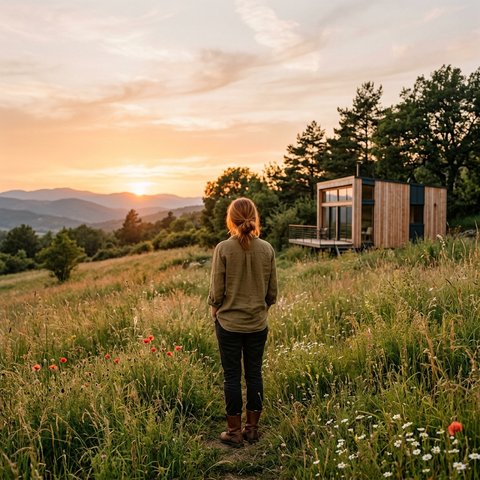
In the industrial age, wealth was measured by the ownership of machines. In the digital age, it was measured by the access to information. But in 2026, as we find ourselves submerged in a sea of synthetic echoes and algorithmic demands, the ultimate luxury is something far more elusive: Silence. Not just the absence of noise, but the absence of *input.* We are witnessing the rise of 'The Great Offline,' a cultural U-turn where the most status-conscious act one can perform is to be unreachable. To stand in a meadow without a device, to live in a room that is systematically shielded from the global grid, is the new frontier of cognitive sovereignty.
This is the 'Architecture of Silence.' It is a design philosophy that recognizes digital noise as a structural distraction, as damaging to our mental well-being as smog is to our lungs. For years, we designed our spaces to be 'connected'—smart homes, integrated hubs, constant notifications. Today, we are designing them to be 'voids.' We are building RF-shielded courtyards, using raw timber and natural stone to dampen the acoustic reflections of our anxieties, and reclaiming the 'Spiritual Bandwidth' required to simply be present. Disconnection is no longer a withdrawal; it is a renewal.
The Rejection of Synthetic Noise
The impetus for this movement is the 'unshittification' of the digital experience. In the mid-2020s, the web became saturated with 'AI Slop'—hyper-polished, synthetic content designed to maximize engagement metrics while offering zero human value. This digital inflation has led to a profound 'aesthetic exhaustion.' We have reached the point where the hyper-mediated world feels less real than the physical one. The Great Offline is our collective response: a conscious rejection of the synthetic in favor of the 'Analog Truth.'
We are seeing a resurgence of the tangible. From the massive popularity of physical board games to the return of film photography and handwritten journals, people are seeking out experiences that are fallible, permanent, and unmediated. An analog object doesn't update its terms of service. It doesn't harvest your biometric data. It simply *is.* This 'Material Truth' provides an anchor in a world where reality is increasingly up for debate. To hold a physical object is to participate in a ritual of presence that no digital interface can replicate.
Designing for Cognitive Sovereignty
The Architecture of Silence is not just about quiet rooms; it is about creating environments that respect the boundaries of the human mind. Modern architects are now incorporating 'acoustic atmospheres' that replace harsh digital echoes with soothing, natural soundscapes. We use biophilic design—integrating raw timber, natural light, and indoor gardens—to create microclimates of calm. These are 'Recovery Zones' where the user can escape the staccato rhythm of the digital feed and reconnect with their own internal rhythm.
This is 'Warm Minimalism.' It is a rejection of the sterile, glass-and-steel aesthetic of the early 21st century, which felt like a laboratory for surveillance. Instead, we use materials that feel human: textured plaster, raw stone, and reclaimed wood. These materials don't just look better; they *sound* better. They absorb the noise of our lives, creating a sense of 'Structural Silence' that allows for deep focus and intentional living. In these spaces, your attention is not a commodity; it is a sanctuary.
The Human Premium: Authenticity as a Choice
In 2026, the 'Human Premium' is at an all-time high. Things that are made by hand, experienced in person, or protected from digital interference are the new markers of quality. The Great Offline is not anti-technology; it is pro-intentionality. It is about using technology as a tool for a specific purpose, rather than allowing it to become the manager of our lives. It is the realization that the most important notifications in life don't come through a screen.
At Soogus, we promote an 'Architecture of Silence' not just in our physical spaces, but in our digital ones. We design for clarity, for minimalism, and for the respect of the reader's attention. But Serephina Gray reminds us that the ultimate expression of this philosophy is to occasionally step away from the digital broadsheet altogether. To find the silence in the meadow, to feel the wind without recording it, and to be present in a world that is not mediated by an algorithm.
Conclusion: The Recovery of the Senses
The Great Offline is the path to the recovery of our senses. It is the way we remind ourselves that we are biological entities, not just data points in a synthetic model. By embracing the Architecture of Silence, we create the space required for genuine creativity, deep connection, and spiritual growth. The world is loud, and it is becoming louder. But the silence is still there, waiting in the offline spaces we choose to protect. The vault of the present is open. All you have to do is step inside.