
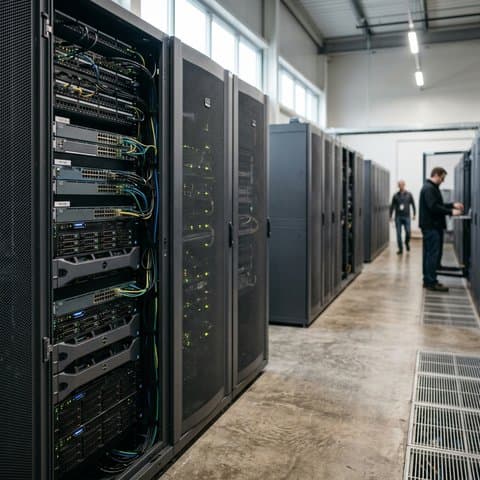
The AI Factory Pattern: Engineering Production-Grade Agentic Infrastructure
By Elias Thorne Full-Stack Architectures & Distributed Systems Specialist
The software engineering community is currently suffering from a collective delusion. We have spent the last three years building playthings—highly interactive, autonomous agentic loops that can write poetry, browse the web, and occasionally write a buggy Python script. In the playground of local prototypes and demo videos, these systems look like the future of labor. But when deployed into the cold reality of enterprise production environments, they collapse under their own weight. They spin into infinite loops, corrupt database states, accumulate massive API bills, and suffer from unpredictable latency spikes.
Moving past this playground requires a return to distributed systems fundamentals. The era of the ad-hoc, prompt-engineered agent must yield to a disciplined engineering methodology. We must stop thinking of agents as "minds" and start architecting them as distributed pipelines. This is the origin of the AI Factory Pattern: a design pattern that structures agentic workloads not as autonomous black boxes, but as modular, event-driven assembly lines.
The Illusion of Autonomy
The fundamental failure of early agentic systems lies in the conflation of reasoning with orchestration. When you write a simple Python script that passes a prompt to a large language model (LLM), reads the response, parses the tool calls, executes those tools, and feeds the results back to the LLM in a while loop, you have coupled reasoning (the LLM's cognitive processing) with orchestration (the execution loop and system state).
This coupling creates an architectural nightmare. In production, this design manifests several critical failure modes:
State Corruption: An autonomous agent executing multiple tool calls sequentially operates without transactional boundaries. If the third tool call in a sequence fails due to a network timeout, the system is left in a half-mutated state. Rollback mechanisms are non-existent.
Runaway Token Consumption: Without strict structural boundaries, an agent encountering an unexpected error condition will frequently spin in a loop, asking the LLM how to resolve the error. This leads to recursive failure loops that consume millions of input tokens in minutes.
Unbounded Latency: Because the execution path is determined dynamically by the LLM at runtime, it is impossible to establish service-level agreements (SLAs). A task that takes 2 seconds on one run might take 45 seconds on the next because the model decided to take a circular reasoning path.
Telemetry Black Holes: Standard application performance monitoring (APM) tools are built for deterministic call trees. When an agent dynamically generates its own execution path, traditional tracing fails. You cannot easily isolate whether a performance bottleneck lies in a slow database query, a high-latency LLM generation, or an inefficient prompt template.
To solve these issues, the AI Factory Pattern decouples the reasoning engine from the execution environment. The agent does not run the loop; the infrastructure runs the loop. The agent is merely a stateless worker that processes a single stage of an assembly line.
The Architecture of the Assembly Line
In an industrial factory, raw materials move along a conveyor belt. At each station, a specialized machine performs a single, deterministic mutation. The machine does not need to know the entire history of the product; it only needs to know the input for its specific stage.
To translate this to software engineering, we must decouple our orchestration into three distinct layers: the Router, the Worker Pool, and the Overseer.
1. The Queue-Centric Router
Instead of direct HTTP request-response cycles, all agentic workloads must be mediated by a robust message queue (such as Apache Kafka or RabbitMQ). When a user requests a task, the Router parses the request into a series of discrete execution "jobs."
This decoupling ensures that the client connection is freed immediately. High-latency LLM generations do not block the gateway. If a worker crashes mid-task, the job remains in the queue, allowing another worker to pick it up and maintain system resilience. Furthermore, we can implement Backpressure Handling: if the external API starts rate-limiting us or if local GPU nodes are saturated, the queue naturally holds the requests without dropping them, smoothing out execution spikes.
2. Stateless Worker Pools
Each worker in the pool is a specialized agent designed to handle a single step in the process. For example, in an automated publishing pipeline, one worker might be responsible for factual verification, another for style translation, and a third for HTML compilation.
Crucially, these workers do not maintain internal state. They receive a message containing the current payload and context, query the LLM to determine the appropriate mutation, execute that mutation within a strict timeout boundary, and push the result back to the queue.
Below is a simplified Node.js worker implementation demonstrating this event-driven, queue-safe execution pattern:
By wrapping the worker's execution in a database transaction and using a Dead Letter Queue (DLQ) for failures, we eliminate state corruption. Autonomy is restricted; predictability is restored.
Mitigating the Coordination Tax
In distributed systems, the "Coordination Tax" is the performance penalty paid when multiple nodes must communicate to coordinate their state. In agentic systems, this tax is exceptionally high because the communication medium is natural language (tokens) rather than optimized binary protocols.
If Agent A must explain its reasoning to Agent B, who must then query Agent C, the system spends the majority of its execution time and budget on token serialization. This results in significant latency inflation and skyrocketing operational costs. To optimize this, we must implement strict latency and state management patterns.
1. Redis-Backed Memory Networks
Instead of appending the entire conversation history to the prompt context on every invocation, we must treat memory as a multi-tier cache.
Short-Term Context Cache (L1): Stored in a fast key-value store (like Redis) with a strict TTL (typically 15-30 minutes). This holds the immediate variables, state metrics, and the last 2-3 interaction states.
Long-Term Semantic Database (L2): Stored in a PostgreSQL database with
pgvectorextension. This holds historical context, vector embeddings of older interactions, and factual reference material.
When a worker executes a task, it queries the L1 cache for immediate state. If a cache miss occurs, it performs a vector similarity search on the L2 database to retrieve only the most semantically relevant context. The prompt is then constructed dynamically, keeping the token payload minimal and optimizing latency.
2. Local Sovereign Compute Routing
Relying on external monolithic APIs (like OpenAI or Anthropic) introduces uncontrollable internet latency and variable billing. A production-grade architecture must leverage a hybrid routing layer.
Simple processing steps (e.g., token parsing, schema validation, basic text classification) should be routed to local, sovereign Small Language Models (SLMs) running on internal enterprise hardware (e.g., Llama 3 8B or Mistral 7B). This eliminates network hops and ensures that sensitive data never leaves the corporate boundary. External frontier models should be reserved solely for complex, high-reasoning tasks. This hybrid model drastically slashes tokenomics costs, enabling high-throughput pipelines to run sustainably.
The Telemetry of Thought
You cannot debug what you cannot measure. In the AI Factory Pattern, we must build telemetry systems that treat the LLM's reasoning path as structured execution graphs.
1. Monitoring Agentic Drift
"Agentic Drift" occurs when an autonomous agent progressively deviates from its original goal during a multi-step execution. To detect this, we implement the Overseer Guard pattern.
The Overseer is a lightweight, rule-based verification layer that runs at the end of each worker's execution. Before a worker's output is committed to the database or pushed to the next queue stage, the Overseer validates the output against a strict JSON schema and a set of logical invariants.
If the output violates the schema (e.g., missing fields, invalid types) or exhibits drift (e.g., the text length varies significantly from the target, or semantic distance from the original prompt is too high), the Overseer rejects the mutation, rolls back the transaction, and routes the job to the Dead Letter Queue.
2. Structured Logging and Distributed Tracing
Every invocation of an LLM must emit structured telemetry logs. These logs must capture:
The exact system and user prompt templates.
The raw input and output tokens.
The JSON representation of the model's "thinking" process (if using reasoning models).
The latency of the model's first token (TTFT) and total generation time.
By integrating custom tracing headers (e.g., using W3C Trace Context headers like traceparent), we can follow a task's journey as it hops from worker to worker across the message queues. Let's see how we can initialize OpenTelemetry to capture this inside our agent nodes:
By piping these spans into a centralized dashboard (like Jaeger or OpenTelemetry Collector), engineers can trace execution paths, identify high-latency prompt templates, and monitor performance degradation across updates.
Toward Systemic Elegance
The transition from monolithic architectures to distributed, agentic factories is not just a change in technology; it is a shift in engineering philosophy.
We must stop treating AI as a magical oracle and start treating it as another computational component. An LLM is simply a non-deterministic function that transforms unstructured text. It has inputs, it has outputs, and it has side effects. If we wrap it in the same architectural discipline we apply to databases, caches, and message brokers, we can build systems that are not only powerful but also reliable, secure, and elegant.
The AI Factory Pattern is the path forward. By decoupling orchestration, optimizing latency through local sovereign routing, and enforcing strict telemetry gates, we can build the production-grade agentic infrastructures of the future. The playground is closed; the factory is open.