

A Novel That Costs More Than My Rent
At three-fifteen in the morning in my four-hundred-square-foot attic in Malasaña, with an electric bar heater glowing dull orange by my shin and the street noise of Calle del Pez dying down below, I did the math.
I took the six hundred printed pages of my unpublished novel—a manuscript I have been revising, crossing out, cursing, and repolishing since October 2019—and placed them on my kitchen scale. It weighed exactly two kilograms and four hundred grams.
Then I opened a notebook and calculated the physical overhead of its creation. Over seven years, I have expended four thousand six hundred euros on high-grade printer paper, toner cartridges, Moleskine notebooks, and blue ballpoint pens. I have paid seven hundred euros in postage and Submittable platform submission fees to send PDF files and padded envelopes to independent publishing houses in Barcelona, Madrid, and Buenos Aires. I have worked three thousand two hundred hours on this book—hours stolen from sleep, from relationships that dissolved into exasperated silence, and from shifts restocking cardboard boxes of detergent at a logistics warehouse in Villaverde.
At current minimum wage, the opportunity cost of my novel is seventy-one thousand euros.
My bank account at Banco Santander currently holds three hundred and forty-two euros and eighteen cents.
Meanwhile, on the laptop resting on my kitchen table, a venture-backed generative application informs me in cheerful pastel typography that if I upgrade to its Pro tier for twenty dollars a month, it can generate an entire three-hundred-page psychological thriller set in post-war Madrid in forty-seven seconds, complete with three twist endings and five chapter options formatted for Amazon Kindle Direct Publishing.
I stared at the blinking prompt box. Then I reached for a red ballpoint pen and crossed out a subordinate clause on page 412.
The Neurosis of the Slush Pile
There is a widespread narrative circulating among freelance copywriters, corporate content creators, and cultural commentators that artificial intelligence represents a sudden, unprecedented catastrophe for writers. They speak as if, prior to November 2022, the literary ecosystem was a warm, welcoming meadow where sensitive young authors were discovered by benevolent editors who nourished their genius with generous advance checks and thoughtful handwritten letters of guidance.
Allow me, as a man with one hundred and forty-seven rejection letters filed chronologically in a manila folder under my bed, to disabuse you of this touching fantasy.
Dimension of Literary Creation | Synthetic Model Output (2026) | The Unpublished Malasaña Slush Pile |
|---|---|---|
Production Latency | 47 seconds per volume | 7 years of nocturnal neurotic insomnia |
Marginal Cost of Text | Fractions of a cent in electricity | €71,000 in lost wages and €4,600 in paper |
Underlying Motivation | Minimizing token loss function | Compulsive human terror of dying unexpressed |
Editorial Reception | High-volume automated spam filters | 147 standardized rejection templates from interns |
Existential Dignity | Utterly zero; pure statistical slurry | Tragic, comedic, and completely indestructible |
The traditional publishing industry did not need artificial intelligence to treat human writing as an unreadable statistical slurry; it has been doing so for forty years.
When you submit an unsolicited manuscript to an established literary house, your six hundred pages do not land on the desk of an erudite publisher smoking a pipe in a wood-paneled office. They land in the slush pile—a digital repository containing eleven thousand unread Word documents, assigned to an exhausted twenty-two-year-old intern who is paid six hundred euros a month and tasked with screening sixty novels a day while answering office telephone calls.
The intern does not read your book. The intern reads the first sentence of page one, glances at your biography, checks whether you have forty thousand followers on TikTok, and clicks the macro button that sends Rejection Template C: "Although your work possesses undeniable stylistic merit, it does not align with our current editorial list."
The publishing industry mechanized the discarding of human literature long before the engineers in San Francisco trained their first transformer model.
Why the Six-Hundred-Page Monster Refuses to Die
Why, then, do I continue?
Why spend four hours on a freezing Sunday afternoon debating whether a character in a Carabanchel fruit shop would say "déjate de hostias" or "no me toques las narices"? A synthetic model does not care about the distinction. It averages the two phrases, computes the nearest vector embedding, and spits out a bland, frictionless approximation of Madrid vernacular that offends no one and moves no one.
The answer is that writing a serious novel is not an exercise in content generation. It is an act of spiritual self-defense against the homogenization of human experience.
The Cycle of the Unread Novelist: Solitary Experience → Linguistic Resistance → Compulsive Revision → Institutional Rejection → Indestructible Persistence
When I write about the smell of diesel exhaust and damp sawdust in a Villaverde distribution center at five in the morning, I am not retrieving semantic tags from an internet crawl. I am recording the actual physical weariness in my shoulder blades, the taste of cold metallic coffee from a vending machine, and the specific cadence of an elderly Moroccan warehouseman named Farid who lost his pension in Casablanca and laughs like a cracked brass bell.
A probabilistic model cannot know what it feels like to be thirty-four years old, broke, tired, and obstinately in love with the Spanish language. It cannot feel the exquisite, agonizing pride of having written a sentence that is entirely your own—a sentence that owes nothing to corporate consensus, nothing to market trends, and nothing to statistical optimization.
The Comedy of the Creative Writing Workshop
To survive in Madrid as an unpublished writer without losing your mind, you occasionally commit the humiliating error of attending a creative writing workshop in a rented backroom in Lavapiés.
You sit in a circle of twelve neurotic souls, drinking lukewarm cider from plastic cups, listening to a retired advertising executive critique your use of the imperfect subjunctive. In those rooms, the prevailing religion is the pursuit of the "agentable hook"—the desperate packaging of traumatic human experience into marketable thirty-second pitches that can be summarized for streaming platform development executives.
When generative software arrived, the workshop participants reacted with hysterical terror. They began running their chapters through automated style analyzers to check their readability scores, pruning away every sharp edge, every eccentric syntactic detour, every regional idiosyncrasy until their prose resembled the frictionless, sanitized marketing copy of an airline magazine.
They failed to understand that the defect is not an error; the defect is the signature of human presence.
The beauty of Cervantes, of Valle-Inclán, of Galdós lies precisely in their magnificent, unruly excess—the long, sprawling sentences that refuse to fit into an efficiency metric, the digressions that lead nowhere except into the heart of human absurdity, the stubborn refusal to make characters behave like optimized economic agents.
The Revenge of the Unprinted Page
Let the corporate platforms flood the digital web with their millions of synthetic romance novels and automated self-help guides. Let Amazon fill its search results with unread digital pamphlets generated by bots for bots.
The synthetic flood will accomplish something that fifty years of literary theory failed to do: it will restore the physical, paper book as the ultimate sanctuary of human authenticity.
When every digital feed is saturated with frictionless algorithmic prose, the only text that will carry weight is the text that cost a human being something real to produce. The book that demanded years of solitary silence. The book that carries the scars of a real life lived in a specific room on a specific street.
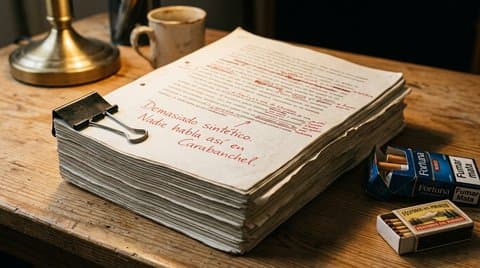 Hand-Corrected Manuscript Pages
Tomorrow morning at six-thirty, my alarm will ring. I will put on my work boots, take the metro line 3 down to the warehouse, and spend eight hours lifting pallets of fabric softener onto metal racks. My back will ache; my supervisor will scream about loading quotas; and nobody in that warehouse will know or care that I have written six hundred pages of prose.
And tomorrow night at nine, I will climb the four flights of stairs back to this freezing attic. I will light the gas stove, make a pot of black coffee, pick up my red pen, and turn to page 413.
The machines have all the speed in the world. But I have the night, I have the language, and I have the stubborn, magnificent refusal to stop writing.